

Deposit return schemes and container deposits
A Deposit Return Scheme, commonly known as a DRS, is a collection system in which a small deposit is added to the price of a beverage. Consumers get this amount back when they return the empty container to an authorised return point.
The system encourages consumers to return bottles and cans, helps reduce packaging litter and makes it possible to collect cleaner, more homogeneous material streams that are better suited to high-quality recycling.
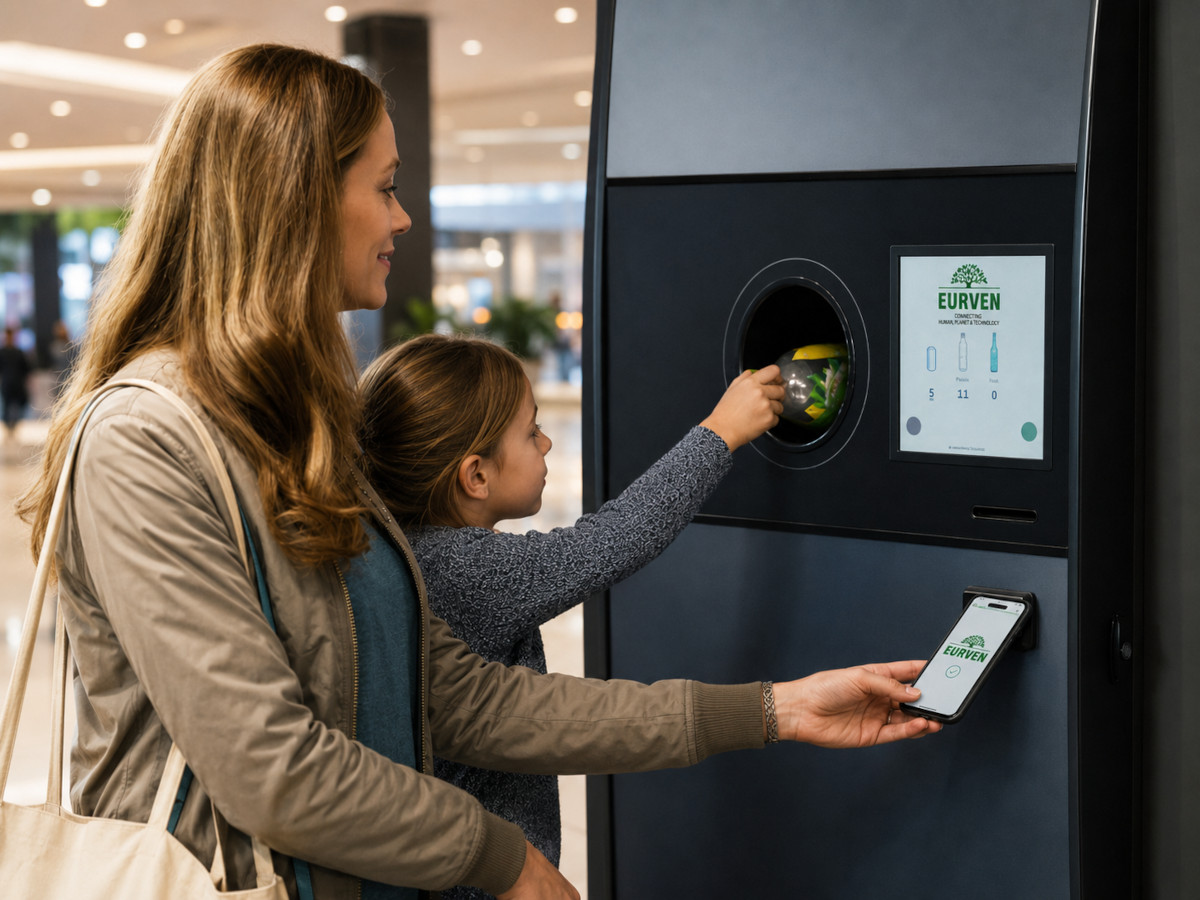
Reverse vending machines automate this process: they identify the container, check whether it is eligible for the scheme, record the return and enable the user to reclaim the deposit.
How a Deposit Return Scheme works
From paying the deposit to returning the container, the process is simple and fully traceable.
Purchase
The consumer buys the beverage and pays the product price together with the deposit applied to the container.
Return
After consumption, the bottle or can is returned to a collection point equipped with a reverse vending machine.
Recognition
The machine identifies the container, checks whether it is eligible and records the return within the system.
Refund
The user receives a voucher, digital credit or another approved form of reimbursement to reclaim the deposit paid.
Deposit refunds and reward-based recycling
The two models use similar technologies but provide users with different types of value.
Deposit refund
Deposit Return Scheme
In a DRS, the amount returned to the user is the refund of the deposit paid at the time of purchase. It is therefore not a promotional reward, but the return of a sum directly associated with the container.
The machine must accurately identify eligible containers and communicate with the central system responsible for managing data, transactions and reporting.
Additional rewards
Reward-based recycling
In reward-based recycling programmes, the value provided to users is defined by the organisation running the initiative. Users can receive vouchers, discounts, points, rewards or other benefits for each container returned correctly.
Reward programmes can also operate alongside a DRS, providing additional benefits on top of the deposit refund and helping to increase user engagement.
The benefits of Deposit Return Schemes
An organised return system creates benefits throughout the packaging value chain.
Higher collection rates
The opportunity to reclaim the deposit encourages users to return empty containers instead of littering them or disposing of them incorrectly.
Cleaner material streams
Dedicated collection reduces contamination from unwanted materials and provides more homogeneous material streams suitable for high-quality recycling processes.
Traceable collection
Returns are recorded digitally, making it possible to monitor volumes, container types, machine status and overall system performance.
Technology for Deposit Return Schemes
Eurven solutions for Deposit Return Schemes
Eurven is a leading designer and manufacturer of reverse vending machines for automated container collection and integration into Deposit Return Schemes.
Eurven solutions can include container recognition, compaction, voucher printing, user identification, connectivity, data exchange with external platforms and remote machine monitoring.
The technology can be used in projects promoted by beverage producers, distributors, large-scale retailers, shopping centres, waste collection operators, consortia, public authorities and DRS operators, with configurations developed according to the containers accepted, expected volumes and required return methods.