

Reverse vending machines: what they are and how they work
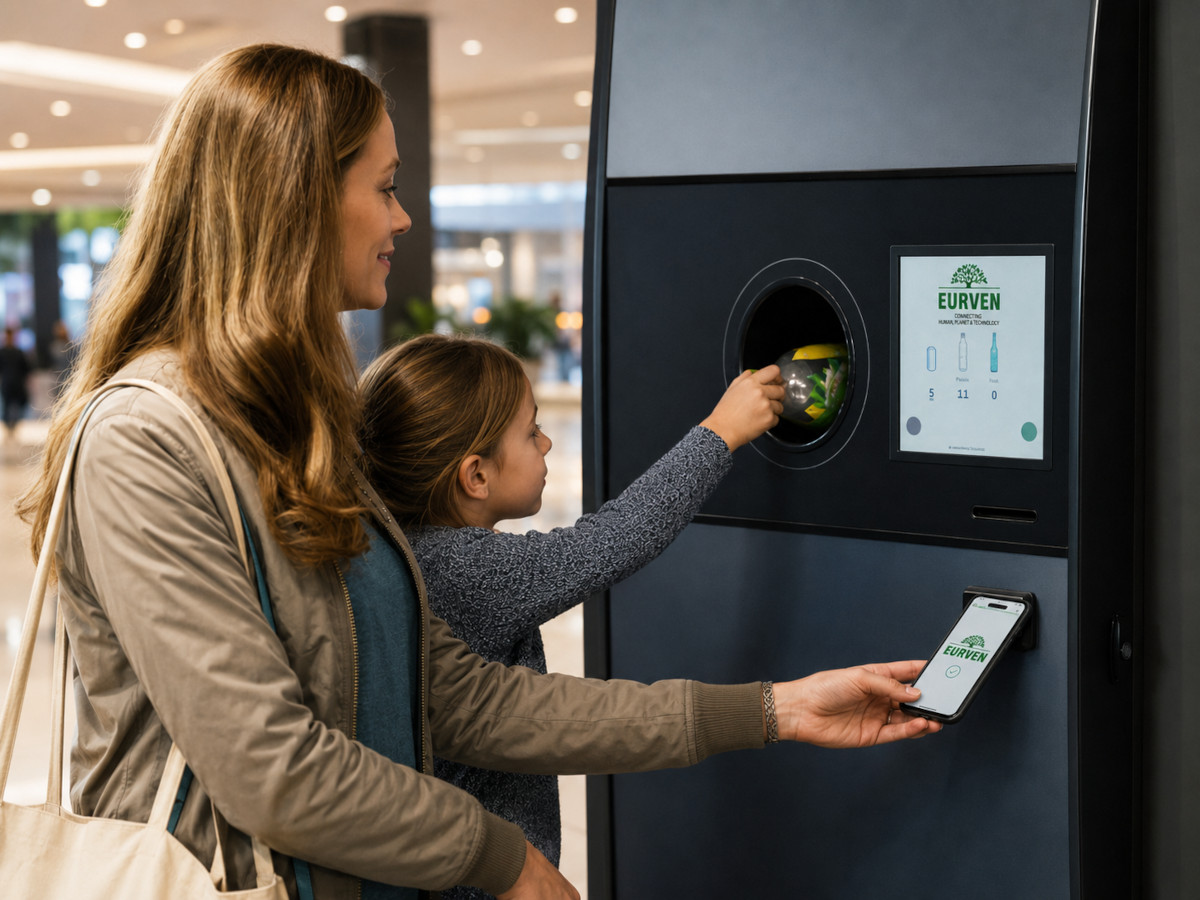
Reverse vending machines, commonly known as RVMs, are automated machines designed to collect bottles, cans and other empty containers for recycling. Depending on their configuration, they can identify the material deposited, check whether the container is eligible, record the transaction and reduce its volume through compaction.
These technologies make collection simpler, more selective and easier to track. They can also link the return of a container to a reward scheme or a deposit refund, adapting to the specific requirements of each project and the organisation managing the collection system.
Reverse vending machines can be used by local authorities, schools, public offices, supermarkets, shopping centres, businesses, hotels and other accommodation providers, hospitality venues, sports facilities and events, with solutions suitable for both indoor and outdoor installation.
The container return process
From inserting the container to recording the data, every stage can be configured to meet the requirements of the project.
Container return
The user inserts the bottle, can or other container accepted by the collection scheme into the machine.
Recognition
The system identifies the container and checks whether it is eligible for the collection scheme.
Collection and compaction
The material is sorted and, where required, compacted to reduce its volume and make handling more efficient.
Rewards and data
The machine can issue a voucher, credit points to an app and record data for monitoring and management purposes.
Reward-based recycling and Deposit Return Schemes
The same technology can be used in two different ways to return value to the user.
Rewarding positive recycling behaviour
Reverse vending machines for reward-based recycling
In reward-based recycling, returning a container is linked to a benefit defined by the organisation running the scheme. Users can receive vouchers, discounts, eco-points, rewards, special benefits or credits through an app.
Rewards can be redeemed at participating businesses or incorporated into programmes designed for residents, customers, students, employees and event participants. Recycling therefore becomes a way to increase participation, raise environmental awareness and create value for the local community or organisation.
Deposit refunds
Reverse vending machines for Deposit Return Schemes
Under a Deposit Return Scheme (DRS), a deposit is added to the price of the beverage. When consumers return the empty container to an authorised return point, the reverse vending machine identifies it and enables them to reclaim the deposit they paid.
In this case, the amount returned is not a promotional reward, but a refund of the deposit paid at the time of purchase. The system supports selective, traceable collection and helps provide high-quality recyclable material from beverage containers.
Technology and engineering
Eurven RVM solutions for the public and private sectors
Eurven is a leading company in Italy and international markets in the research, design and manufacture of technologies for automated collection, reward-based recycling and reducing the volume of collected materials.
Eurven develops reverse vending machines and customised systems based on the materials to be collected, expected volumes, available space and project objectives. Solutions can integrate vouchers, apps, user identification, telemetry and data monitoring.
This flexibility makes it possible to develop tailored projects for public authorities, businesses, large-scale retailers, shopping centres, schools, hotels and accommodation providers, foodservice operators, sports facilities and events, helping public and private organisations implement more efficient and engaging collection systems.